West with the Night: Livelier Writing through Imagery and Symbolism (Week 2)
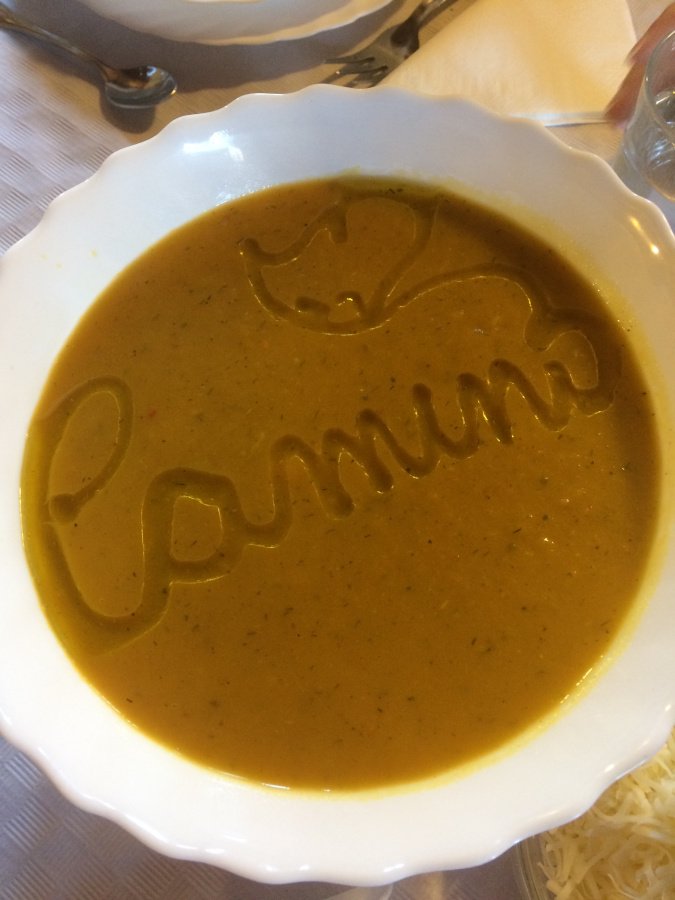
What does the simplest, most unremarkable object in your story want to tell you? Photo credit: Adam Groves / Ultreya Editorial
Last week we embarked on a journey to learn more about imagery and symbolism, traveling through the landscape of Beryl Markham’s memoir West with the Night as a point of reference. (If you need to remind yourself of what we mean when we talk about imagery and symbolism, I defined them in the previous post.) We caught our first glimpses of how these writing tools help a writer feel reverence for the complexity of their subject matter and communicate that reverence and complexity. For writers of memoir and non-fiction, this translates as reverence for life, truth, and oneself.
Today we will look at one of the fundamental powers of imagery and symbolism: bringing the literal parts of your story—the people and things and sensations—to life.
We’ll see how imagery and symbolism help you weave a lively web of people, things, events, feelings, and ideas that strengthens every part and vibrates with the meaning which everything in your life contains.
Along the way we’ll observe a corresponding risk of relying only on “bare facts and opinions.” That is to say, we’ll look at what happens when you turn your story into a slide show, or a report, made up of blurry snapshots that are only connected in ways you explicitly announce.
To new writers in particular, I assure you once again that imagery and symbolism are tools which you can learn to wield skillfully. You have the potential to write stories that are as full of life and mystery and meaning as Markham’s.
And to every writer, remember that empowering yourself to write more richly is a continuous journey of learning and it is not just about making something that appeals to readers. More importantly, it helps you become more curious and excited about yourself and the stuff of your life, as you grow your skill and desire to till the plain, bare earth of mere facts and let the deeper richness of your story bloom.
Remember: the truth is much more than we assume it to be … so long as we let it reveal itself. One of the secrets of rewarding storytelling is that anything can be written about in a way that opens up its rich, bottomless potential and lively importance to the bigger picture.
Yet we often struggle to bring this potential to life when we write about, well, life.
The ironic thing is that everyone who picks up a pencil or sits down at a computer starts from a legitimate conviction that their story matters. But in the process of putting the feelings and memories down, the words on the page often struggle to mirror the sense of weight and urgency.
The excitement, the earnestness, may resist taking up residence in the story as you feel like you are wading through a barren waste of tedious details. “Who cares about the grass? The pollen? My sneezing? The lawnmower? The fact that I’m sweating? But the thing I want to talk about happened when I was cutting the lawn, so I guess I’ll hurry up and write these facts down so I can explain why it’s important.”
As you toil, the feeling of conviction may be replaced by a more powerful one of frustration. “Who will ever read this?” you may cry. “Even I’m losing interest. I need to get to the point before this falls apart entirely.” The greater this uneasiness becomes, the more you may find yourself shoehorning urgency into your story … slicing out what seems to be boring, or shouting and banging your fists in capital letters about exactly why what you’ve included matters.
In the worst-case scenario, you may surrender completely to the fear that some people, some lives, are more interesting than others. You may decide you are one of the others and abandon your writing completely.
Please don’t do that! I urge you to take comfort in the fact that turning everyday feelings and experiences into living, breathing words which cradle the beating heart of your life story is not only hard for you. It is a lot of work for every writer, even if you are actively using tools like imagery.
But if you try to resuscitate your story by resorting to strict factual reporting and bald commentary, then putting color in its face and getting it to leap to its feet and dance will only get harder. Why? Because you are not really permitting the story to live in its own right. Instead, you are standing behind it, awkwardly holding it up, moving its arms and legs with your own and speaking for it in a crude ventriloquist act.
Let’s look at an example from Markham that illustrates how imagery and symbolism bring an otherwise plain situation very much to life, and which shows that you don’t need to rush your story or insist on your point.
In the chapter “Hodi,” we find her one evening doing bookkeeping on her horse training farm in the weak light of a lamp. First I’ll offer a bastardized version that I wrote based on her text. I have stripped as much of the imagery and symbolism as I can manage:
I sat alone in my home poring over my ledgers. There was an old lamp on the table that barely lit the room. It was hard to see what I was reading or writing. I felt so lonely and depressed.
In this example, there are four identifiable objects. Ledgers, lamp, table, and narrator. Of these four, two just barely breathe and wriggle: the narrator, who sits (which contributes to an image, albeit a spartan one), and the lamp, which is dim and old (but what does old and dim actually signify? How old? How dim? Why does it matter?). The person reads and writes, but you don’t actually witness that; and they feel lonely and depressed, but that again is not shown; you must assume it based on the naked announcement of what we know in our hearts are complex feelings.
In short, if you are a reader and you want what’s on the page in this scene to come alive at all, you will have to do a lot of heavy lifting with your own imagination.
This is the sort of prose that can result when you write backward from what you think is important with the goal of getting to the would-be point. This strategy neglects almost all of what was actually present in the moment (we will see this more fully shortly). There is very little feeling of life in this paragraph. When your primary goal is to announce what is important and why, you run the risk of erasing the actual scene. Instead, all you allow yourself to explore (and which you eventually permit readers to witness) is a mere shadow of your lived experience that is almost completely obscured by the larger shadow of abstract declarations.
This stripped-down version of Markham’s scene does contain a slight amount of imagery and symbolism, in the most basic ways. There are things present, after all, and something does happen. Also, the concept of loneliness in that bare room and the assertion of depression, as vague as these ideas are, do conjure mental pictures in the head of the reader. So regardless of how incompletely this picture is painted, the glimmer of a picture is present, and the ideas it contains do have some symbolic power (weak though it may be).
The good news we can take away from this is that it is difficult to avoid using imagery and symbolism on at least some level, even if we are not aware of those tools!
Even our most spartan scenes usually can’t help but contain something that takes up real and imaginative space; something that evokes a feeling, an association, a response. Your memories, your stories, want to stand and breathe and wave their arms and poke back when you poke them. They want to contain imagery and symbolism. So let them! It won’t just enliven into your writing, it may even excite your desire to write.
Now let’s look at what can happen when an author sinks into the moment she wants to write about and lets it come to life around her, instead of focusing only on where she wants to end up.
What does Markham discover? How does this perspective breathe life into her writing? (And consider, as you read, what might happen for you if you started from the full truth of where you were, what was there, and what was happening.) Here are Markham’s original words:
“It squats in the amber corona of its nearly futile light, twisting decent shadows into tortured shapes….
“It is an ancient lamp …. Its base is cheap metal, nicked in places, its chimney is smudged with soot. How has it lighted the hours of how many men? How many men have scribbled under it, eaten under it, got drunk under it? Has it ever seen success?
“I think not. It is … as if no man with hope in his fingers had ever trimmed its wick. It gives a joyless light; it is a dissolute eye. Watching it burn I am at last depressed. I make it a symbol of despair, only because it is not brighter, perhaps because it cannot talk.” (p. 145)
She then says, of the pen in her hand, “Silence is never so impenetrable as when the whisper of steel on paper strives to pierce it. I sit in a labyrinth of solitude jabbing at its bulwarks with the point of a pen” (p. 145).
Wow! Do you see what a difference this makes? Markham paints a visceral, irresistible tableau into which the reader must fall with her, to experience her feelings and associations with her. First of all, the dim light is much more visceral. The light is amber, it casts a nearly futile corona, it is so weak that shadows which should be easy to discern become tortured shapes. The same goes for “old”: the lamp is ancient, made of cheap metal, nicked, smudged. Never mind the rest of the scene; I long to linger with Markham over this fascinating lamp. How about you?
And I also love the lively, intrusive sound of her pen on the paper, which I never would have pictured as a weapon that a warrior is scraping against the walls of a labyrinth of loneliness (or maybe, more prosaically, as nails on a chalkboard. Steel on paper? Ugh!). I can’t get this pen out of my head. What about you?
Regarding emotion, Markham does, in fact, say how she feels, but pay attention to her manner of doing so. Her direct statements “it is a symbol of despair” and “I am at last depressed” are nested inside of a more broadly-explored emotional context, as she imagines other people who’ve felt like failures under the cursed light of that lamp and why they’ve felt like failures; and she even connects that feeling to the very light itself, as if this weak flame is the primary outcome and evidence of all the inept and depressed hands which have handled this lamp. So statements of feeling do not take the place of a full emotional picture of the scene. Instead, the statements inhabit the scene on an equal plane with a variety of emotional images and implications. There is even a certain hint of skepticism, as Markham leans so hard into this feeling of depression that it silently begs the reader—and I bet the writer—to ask, “sure I felt this way, but how well was I seeing the whole truth?”
Let’s take a beat to draw a fine line between imagery and symbolism. The point I’m about to make is, I think, especially valuable for beginning writers, who may find the idea of creating scenes like Markham’s daunting.
First, remember something we observed last week: that images are like magnets, which irresistibly draw symbolic meanings to them. We humans, in our creativity and pattern-hunting, cannot resist making these associations. So to ease any stress you may be feeling, and to help you get more in touch with the excitement and wonder of how much you can accomplish with only a little effort, I offer the following:
You can write powerful and engaging scenes, just like Markham, without making explicit symbolic associations. If you only work on creating rich descriptions of tables, trees, lamps, pens, shoes, dust bunnies, leaves, pants, windows, rivers, birds—that is to say, rich images—your scenes will still come out overflowing with symbolism.
There is a learning curve with such things, and there are plenty of other tools to learn about as well, but for today our goal is simply to witness, be thrilled by, and be encouraged by just how much we can add to our writing by moving a bit of our energy away from telling and putting it into showing; into describing the things in our scenes more fully.
As we start to wrap up, I want to circle back to the fear of boredom we mentioned earlier.
If you’re writing without employing imagery or symbolism, if you are tackling your story with a highly-literal writing strategy (hastily pinning facts to the board and rushing to say what’s important about them), then it can be hard to stay excited and focused as you write. The anxiety of getting to the point can be tyrannical.
But if you do make use of lively writing tools like imagery and symbolism, you start liberating yourself and your material from self-oppressing judgments about what in your life is worth your time and attention.
By using writing tools, you become more able (and eager) to take a second look, and a third, and a fourth, at the humblest, most-seemingly-boring moment in your life. You discover in yourself the desire to dignify anything or everything that is present. You begin to notice the hidden vibrations of meaning that supposedly unremarkable things, people, and events contain.
Again, look at Markham’s captivating scene. She is not just sitting in dim light. She is not just writing with a pen. She is not just doing bookkeeping for her horse training business. Markham is in a fortress under siege (earlier she had described the trees surrounding her home as guards), and this woman and the living objects around her are comrades in arms, engaged together in a pitched battle with doubt, with loneliness, and (this is extra context that comes earlier in the story) with the feeling that Markham herself, barely an adult, has doomed herself to an absurd and careless venture by leaving her father’s horse training ranch to found her own.
And also, once again, notice that the objects around her are not only symbols. Too aggressively turning everything into a symbol presents a different sort of danger (but that is for a discussion on some other day.) No, Markham’s symbols are also well-realized versions of exactly what they are. She gives the lamp enough character and space to simply be a lamp, and the pen to be a pen. There is that interesting moment where she explicitly calls out the lamp as a symbol, but in the context of the scene it is not the author doing this so much as young Beryl, who in that moment feels so lonely she wishes even a lamp could talk. In this way writer and reader alike remain steady in the fact that the lamp is a lamp first and foremost, and interesting because of that, whatever other meanings we might attach to it.
A final point regarding boredom vs. the power of imagery and symbolism: these tools help you weave a tantalizing web of connection between everything in your story, which makes even the most “boring” thing a magic box of revelation.
Let’s jump ahead a couple of pages in “Hodi” to where Markham is still, for the moment, suffering in lonely silence, with only the scratching of her pen to keep her company. There is the sudden sound of soft footsteps, then a voice in the darkness calls out the tentative greeting “Hodi” (p. 146; the symbolic richness of this word in Markham’s story could be a discussion on its own).
Suddenly, in the middle of her crisis, Markham is delighted to receive a friend she has not seen since they were both children; a boy once named Kibii who has grown up into the man Arab Ruta. Watch what happens to the lamp in that once-dreary room:
“I wonder now how long we talked, how long we sat at the cedar table with the lamp at our elbows – the good lamp, the gay lamp transformed in character, no longer bent, but only leaning toward us to lend its light to an old companionship?” (p. 147)
Here Markham is leaning heavily into her symbolic associations with the lamp, but still the contours of the thing as a dynamic object remain present (“bent”, “leaning toward us to lend its light”). But more to the point, by writing a lively lamp into the earlier scene, Markham opened up an opportunity for herself to be surprised by this lamp, who turns out to be another dynamic visitor in her memory. In a sense the lamp grew and changed and revealed new truths to her, just like Arab Ruta.
Markham’s humble and outstanding feat of lively storytelling is one that you are also capable of.
Do you see everything that Markham accomplished with just a lamp? You, too, through imagery and symbolism, can fill up scenes, stories, and whole books with abundant life and meaning. And I believe it will enrich not only your writing but the way you reflect upon your life and what you can learn about yourself.
You, too, can write fertile, engaging stories of your experiences that thrill and engage you in the process of writing and discovery (and that may likewise enthrall your future readers). Your life is not boring, and you are not doomed to boring storytelling. Even if all you have to work with is a room, a lamp, a pen, paperwork, and two people saying hi.
An exercise:
Pick a memory from your life to write about; ideally a boring or predictable one. Something you have come to attach an instinctive meaning the second you remember it.
While you write, ask yourself, “What else might this mean?” Start by looking at what else was present aside from what you normally pay attention to. What else was happening? How else did you feel (aside from the emotions you habitually assign to the memory)?
See if you can “unboring” whatever is the thing that is your pen or your lamp. Try making it the most important thing in the scene. Hold it in your imagination, play with it. Describe it in strange new ways (like only by sense of smell or sound), then describe it some more.
Maybe you even manage to surprise yourself with an unexpected guest—a person or an object or a feeling calling out “Hodi.”
Be playful. And if certain parts of the scene start to whisper, “I am a symbol,” lean into that. State it out loud or just pay attention to how that thing enriches the scene. You don’t need to try too hard with this part; symbols reveal themselves to us while we are simply paying attention.
Works cited:
West with the Night, Beryl Markham. North Point Press, 1983.